
GFCI Outlets and Gulf Coast Humidity: Where Your New Orleans Home Needs Shock Protection
GFCI outlets protect you from electrical shock by detecting current imbalances and cutting power almost instantly. They’re different from circuit breakers, which protect wires from overload. A GFCI monitors current flow; if it leaks to ground, it kills the circuit. This matters in wet areas and is critical in New Orleans, where humidity and outdoor living spaces create constant shock hazards.
Why GFCI Protection Matters in New Orleans
The Gulf Coast climate—persistent humidity, frequent moisture, courtyards, raised piers, and outdoor kitchens—means water and electricity mix constantly. Standard circuit breakers don’t detect shock danger; they only react if too much current flows through a wire. A person touching a wet outlet or corroded outdoor receptacle can complete a path to ground that draws very little current. A 15-amp breaker won’t trip. A GFCI will. In New Orleans, where outdoor entertaining is part of the culture and moisture infiltration is inevitable, GFCI protection isn’t optional—it’s essential for safety.
Water exposure is relentless here. Salt air corrodes exposed connections, raised piers trap moisture underneath homes, and patios see rain and humidity day after day. A breaker stops an overloaded wire from melting, but it can’t sense the moment a wet hand touches a live outlet or a hairdryer falls into a sink. A GFCI can.
Where GFCI Outlets Are Required
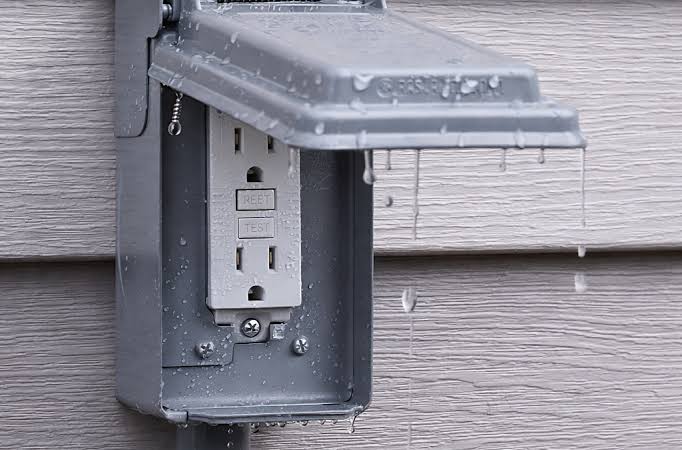 Building codes generally mandate GFCI protection for kitchen countertop receptacles and outlets near sinks, along with bathrooms, laundry areas, garages, unfinished basements, crawl spaces, outdoors, and wet bars. New Orleans presents unique challenges. Raised-pier construction means crawl spaces retain moisture year-round, and courtyards function as permanent living space. If you’re unsure whether a location needs GFCI protection, assume it does. A licensed electrician can evaluate your layout against the code edition your jurisdiction has adopted.
Don’t underestimate wet bars, powder rooms, or covered outdoor areas, all common in New Orleans homes. Wet bars follow kitchen rules, and powder rooms fall under bathroom requirements. The principle is simple: anywhere water and outlets can meet, GFCI protects people.
How GFCI Differs From AFCI
Arc-fault circuit interrupters (AFCIs) detect dangerous arcs that can start fires. GFCIs detect shock hazards. You need both: AFCIs protect against fire risk, GFCIs protect against shock. In bedrooms, codes often require AFCI protection. In bathrooms and kitchens, GFCIs are mandatory. They serve different purposes and aren’t interchangeable. When updating your home’s electrical system, ensure your ELECTRICIAN installs both where required by the adopted local code.
Think of it this way: an AFCI is a firefighter, a GFCI is a lifeguard. Failing wire insulation can arc and generate heat, which is the AFCI’s concern. That same wire might energize a wet surface, which is the GFCI’s. Some locations require both.
The Two-Slot Outlet Problem
Older New Orleans homes often have two-slot ungrounded outlets, commonly called two-prong receptacles. These lack a ground pin and create shock hazards. You can’t replace a two-prong outlet with a three-prong outlet without running a ground wire, and most older homes don’t have that capability. The practical solution is to install a GFCI receptacle in that circuit. A GFCI outlet provides shock protection even if the circuit lacks grounding. Label the outlet “No Equipment Ground” so users know not to plug in certain high-power devices. This approach protects against the most common shock scenario.
Testing and Troubleshooting
Test GFCI outlets monthly by pressing the TEST button. The outlet should trip, cutting power. Press RESET to restore it. If your GFCI doesn’t trip during testing, replace it. If it trips constantly with no load, something is wrong. Nuisance tripping isn’t a reason to bypass the GFCI or install a non-GFCI outlet. It’s a symptom. Common causes include moisture on the outlet, old age of the GFCI itself, or a real leak in the wiring or insulation somewhere on that circuit. Find and fix the root cause rather than disable the protection. Call a licensed electrician if you’re uncertain.
Outdoor GFCIs in New Orleans often trip more than indoor ones, particularly after rain. That isn’t a defect. Before assuming the outlet is bad, dry the cover and the surrounding area. If it trips again once dry, suspect wiring damage from corrosion or water penetration and have an electrician inspect the circuit.
Frequently Asked Questions
Can I use a GFCI power strip instead of installing a GFCI outlet?
A GFCI power strip offers temporary shock protection and is better than no GFCI at all, but it’s not ideal for permanent installation. A GFCI outlet installed at the breaker panel or wall provides protection to everything downstream. Power strips can be unplugged or moved. For permanent protection in kitchens, bathrooms, and wet areas, install a true GFCI outlet or a GFCI breaker in your panel.
Do older homes really need GFCI outlets if the wiring is old?
Yes. Older wiring increases shock risk because insulation degrades over time. Age makes GFCI more necessary, not less. Many older New Orleans homes have cloth-wrapped wiring and ungrounded circuits. GFCI is one of the most practical protection upgrades an old home can receive. A licensed electrician can evaluate your wiring and recommend where to prioritize installation.
How often do GFCI outlets fail?
Most GFCI outlets last many years in dry indoor settings. In humid Gulf Coast climates, especially outdoors or in damp basements and crawl spaces, they can wear out or trip more frequently. If an outlet trips constantly, replace it. If you replace a GFCI and it trips again immediately, have an electrician check for moisture intrusion or wiring faults. Regular testing catches failing outlets before they leave you unprotected.
About MK Electric Man
MK Electric Man serves New Orleans, Chalmette, Metairie, Kenner, Jefferson Parish, and St. Tammany Parish with licensed electrical expertise in GFCI outlet repair and installation, outlets and switches, ungrounded wiring correction, and electrical safety services.
